Teignmouth Photo Walk 4

My photo walk now brings me to the site of the historic South Devon Atmospheric Railway. Many readers may be more familiar with Elon Musk's Hyperloop than they are with this actual railway which existed over 170 years ago.

Isambard Kingdom Brunel's South Devon Atmospheric Railway (1847–1848) was a pioneering, short-lived Victorian railway experiment between Exeter and Newton Abbot. It utilized stationary steam engines to create a vacuum in a pipe between the rails to propel trains, aiming for higher speeds and lower costs, but failed due to leather sealing failures, lasting only seven months.
Brunel was way ahead of his time but not short of any vision or creativity. He was, however, hugely limited in his ideas by the constraints of existing technology, and materials, unlike Elon Musk who is the beneficiary of a hundred and fifty years of innovation and discovery that would have seemed like fantasy to Brunel. The Atmospheric Railway worked on a vacuum tube containing a propulsion system which moved conventional carriages along a track while Musk's Hyperloop intends to place the entire carriage inside that tube.
If you are interested in the relics of the Atmospheric Railway and you shop in the Lidl supermarket in Torquay, notice, when you next park there a brick tower right next door, you cannot miss it. This was a pumping station from where the vacuum in the propulsion tube would have been created. This particular tower on the Torbay branch never came on line before the system was abandoned.

As well as the change from atmospheric to conventional trains there was also a notable and historic change of track gauge right here. The final conversion of Brunel's 7ft ¼in broad gauge to standard gauge (4ft 8½in) in Devon and Cornwall took place over the weekend of May 21–22, 1892. This massive logistical effort, known as "gauge conversion week," saw over 4,000 workers replace 171 miles of track from Exeter to Penzance, including major routes through Teignmouth, Newton Abbot, and Plymouth. By Monday morning, May 23, 1892, standard gauge trains were running throughout South Devon.
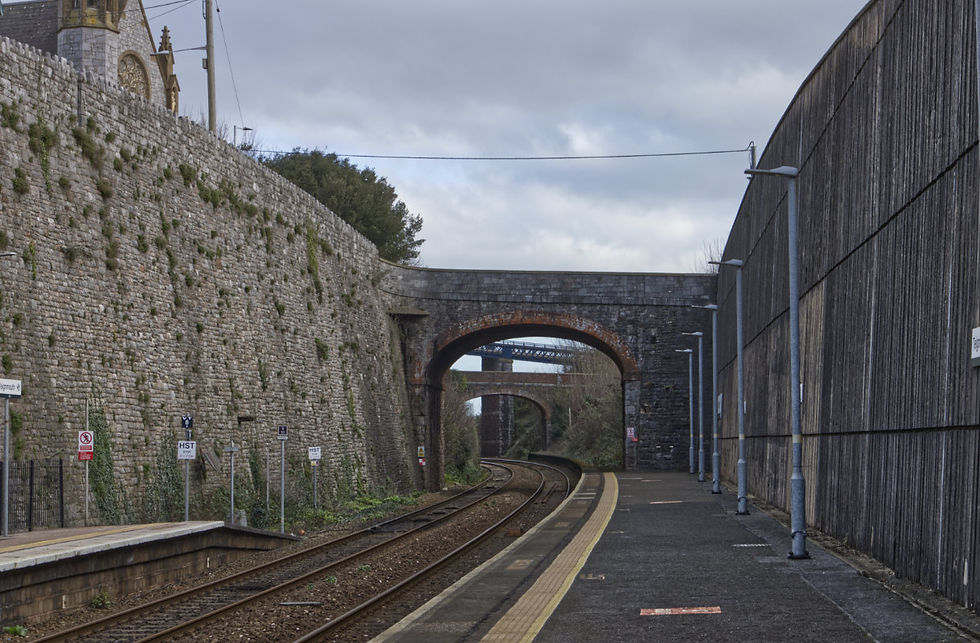
The atmospheric failure means that today we see conventional trains running through Teignmouth instead. This was not the station as seen when the line opened, this building came later. There was also a later branch that led to the New Quay for freight.

At the Teignmouth Mechanics Institute in 1835 the opening lecture of the fourth session was about Railways. Everyone in Teignmouth had heard of them and a few people may even have seen one, and they were on their way to the town.
Exeter and Plymouth Gazette - Saturday 28 November 1835
The subject selected was "On the advantages to be derived by a Country from a rapid and cheap communication between the capital and provinces;" and a more suitable and appropriate topic could not have been introduced in connection with the progress and improvement now making in all parts of the Country by Railways........
After a short preface, G. S. CURTIS, Esq., who had prepared the Lecture, proceeded to deliver it. He commenced by alluding to the Grand Enterprise now in contemplation of uniting the West of England more intimately with the Capital and the great Manufacturing districts of the North by Railway Communication ; and examined the various degrees of perfection in civilization to which the different Nations of Europe had arrived; and showed that they were found in an exact ratio with the means which they possessed for facilitating intercourse with the capital, thus exchanging their manufactures and agricultural produce for the necessaries and luxuries of foreign climes......

contd. The Lecturer quoted some laughable and interesting anecdotes from Fyne. Moryson's Itinerary, and other writers, relating to the extraordinary slow rate of travelling, which we in the West had so greatly improved upon of late years, that many of the audience began to think he was referring to antediluvian times, instead of those in which the fathers of most of those present had actually lived ;
The Lecturer said that he conceived opposition might be brought against even such a splendid undertaking as this, precisely in the same way as the Stocking Loom invented by William Lea, in the reign of Elizabeth -the Steam Engine established in the latter part of the last century, and the Stage Coaches in the reign of Charles II., and indeed like all new inventions, tending to cheapen the cost of production, and encourage human labour, have had to contend not only with the prejudices of the ignorant, but the interested motives of designing men.......
contd. Were a German to arrive in Exeter, and ask the porter at the New London Inn the distance to the Metropolis, he would be told 176 miles, and dividing that number by 5-the ordinary rate of travelling in his own country, he would lay it to his account to be in London in 35 hours,-in just half that time by the Devonport Mail he would find himself in Piccadilly. There must be many who remembered the time when it took 3 days to reach London ; now they may breakfast in Exeter and sleep in Town ;- bringing Devonshire within one day's drive of the Metropolis was virtually bringing it within one-third of the distance it was 60 years since.
Society cannot stand still, it knows no resting place for any long period, it must either go backward, or it must go forward-were it to go backward, we should not only lose all the elegancies and luxuries which we now so supereminently enjoy, but what would be worse, we should lose all the knowledge which distinguishes us from an uncivilized people-we should commence a backward race, leaving it to the inhabitants of unexplored countries to march forward -- upon them the glorious sun of knowledge would be rising to shed its beams, whilst the heavy clouds of night would be fast settling over the hills of our beloved land."The Lecturer" concluded amidst loud plaudits, and a resolution of thanks was unanimously voted to him for his excellent address.
Nine years later and the railway is close. Some things never change and acquiring the property on which it would run was as controversial as it is today. The estimated cost to acquire land and property for HS2 Phase One was over £4 billion by late 2024, with total project property costs rapidly rising. Overall, close to £4 billion was already spent on land acquisitions as of early 2022, with costs for the now-cancelled northern phase 2a and 2b exceeding £560m, including £1.4m spent even after the route was scrapped.
Western Times - Saturday 10 August 1844
ORIGINAL CORRESPONDENCE.
ADDRESSED TO THE EDITOR.
SOUTH DEVON RAILWAY, TEIGNMOUTH.
Notices have been served on the occupiers of houses and other property, in the line of the Railway, to quit in 21 days; but in most cases not a word has been said to the landlords, and not the slightest hint has been thrown out about compensation. The Railway Company cannot fancy that the owners are so stupid as to allow possession to be taken before the property is sold and paid for. In my humble opinion, the Company should have first agreed with the owner, and then, and not till then, have given the tenant notice to quit, but the landlords are wide awake. The tenants also in trade must be paid a compensation before they quit, and it is but fair that every tenant, whether in trade or not, should be compensated for the trouble and inconvenience of leaving his house at a short notice ; and I hope the Company will deal liberally with the working classes, and give them the means of paying the arrears of rent which they may owe, that they may come with clean hands to a new landlord, and be able to look cheerfully on their old one. There is a great deal of difference between will and shall. The Company do not say, will you sell me your property, and will you quit; but they say we have a law, that you shall sell us your property, and that you shall quit, whether you like it or not. This, although for the public good, is an individual hardship, and, therefore, it is to be hoped, that the Company, with such a power, will deal
A LOOKER ON.

The railway opens and incredibly, Exeter is now only three quarters of an hour away. The opening even gets a mention in the Penzance newspapers where people no doubt are awaiting the extension of the line.
Exeter and Plymouth Gazette - Saturday 30 May 1846
TEIGNMOUTH.
The inhabitants of this town are on the qui vive for the anticipated opening of the railway, which is announced to take place to-morrow (Saturday), and a plentiful harvest is expected from the numerous influx of visitors which the new mode of communication will attract to this favourite watering-place. The weather is brilliantly fine, and the country around us presents a beautiful appearance, from the luxuriant vegetation. The wheat fields have very much improved within the last few days, and there is a very fair promise of a bountiful crop. The potatoes are also looking healthy, and no signs are yet visible of any disease amongst them. Garden produce is plentiful, and in all important points we are well prepared for the summer season, which it is generally believed will be the busiest ever known here. It is intended to considerably extend the accommodation for visitors, by the erection of a number of lodging-houses on the most approved plans : and now that we are brought within three quarters of an hour's journey of Exeter, this town will stand unrivalled as a resort for invalids and holiday-makers.
I enjoy coming across antiquated words or phrases when perusing the archives.
Qui Vive - To be on the alert or lookout.
Two days after the Grand Opening, "Build it and they will come". This opening was the conventional system of railway. as the atmospheric system was introduced in 1847. The first atmospheric train arrived in Teignmouth on 16th August 1847.
Western Times - Saturday 06 June 1846
TEIGNMOUTH.
(From our Correspondent.)
On Monday last, the influx of visitors outdid all anticipation, and baffles description, the streets were one moving mass, and it was with the greatest difficulty that hundreds were able to get near enough to the station to get a sight. Upwards of 4000 persons were booked at the office, and it is calculated that 4500 persons were conveyed to Exeter and intermediate places on that day, and that from the day of opening to Monday evening, 8000 persons had availed themselves of the opportunity to taste the delights of steam. The number of persons conveyed from Teignmouth to Dawlish is amazing, both towns were dressed in holiday apparel, and indeed, the bustle was very great, so great, that a dear old lady of our acquaintance, was denied the privilege of enjoying herself with the rest, from a dread that "such incomers must rise the price of bread," and cannot unravel the mystery of the bread being lowered in price one penny on the 81b. loaf during the last week. Prices of provisions are falling, and ere long, Teignmouth will compete with any place in the kingdom for lowness of the price of provisions. Monday was a holiday that will remain engraven on the tablets of our memory, when all trivial circumstances shall be erased. Too much praise cannot be given to our old bonifaces, for the way in which they discharged their duties to those visitors that honoured them with their company.
It's interesting to see that commodity prices falling immediately as a result of the arrival of the railway is specifically mentioned. It is also interesting that only a month later and we also learn that organised crime had "infested" the station.
Taunton Courier and Western Advertiser - Wednesday 29 July 1846
TEIGNMOUTH RAILWAY STATION .- The Western Luminary says-" We have received a communication from a gentleman of high respectability and a county Magistrate :- 'As a caution to the public, I deem it right to inform you, that the Teignmouth railroad station is infested with a detachment of the swell mob, who play their game most successfully on the arrival of the trains from Exeter. The two following cases happened yesterday, the 18th instant, on the arrival of the express train ; two ladies had their pockets picked, as they were alighting from a first class carriage ; one, my aunt, of a purse containing six sovereigns, and the other lady of her purse, containing £9. At the time they lost their property, they were shoved about very roughly by some men who were standing about the carriage."
"Swell Mob"- was a new one on me. A Swell Mob was a 19th century term for gangs of well-dressed, stylishly groomed pickpockets and thieves well known to operate in London and other large cities. Appearing to be prosperous and of high standing this allowed them to blend into a crowd at busy venues, like the newly opened Teignmouth Station.

Only a month later and holiday excursions have already started, although this one was bad news for Teignmouth's pubs..
Western Times - Saturday 25 July 1846
TEMPERANCE PLEASURE TRIP.
On Wednesday the Teetotallers of this city, took a trip down the South Devon line to Teignmouth. It was the first cheap trip which has been got up since the opening of the line, and as the price was very moderate, sixteen pence only for a ride to Teignmouth and back, a number of respectable persons, besides the pledged tee-totallers were anxious to seize the opportunity of a pleasant trip to the sea. Mr. R. W. Fox, of this city, who is so well known as a zealous and indefatigable advocate of temperance principles, had the arrangement of the train, and from his judicious management, it was an excellent and delightful holiday. He had secured twelve carriages, which were all that could be at first obtained-but as the sale of tickets was very rapid, and applications for a larger number numerous, he succeeded in getting a couple of carriages more from Paddington ; even then, hundreds were disappointed, as great care was taken not to sell more tickets than the carriages would conveniently take. Twenty minutes after 12 was the time appointed for departure, and by that time a great crowd was assembled at the station.
The beauty of the weather, and the length of the train having drawn large numbers to witness its departure. The cliffs above Head Weir, Bartholomew Terrace, the St. Thomas fields, and every
spot from whence a sight of the train could be procured, were thronged with spectators. "At the time announced, the train which consisted of 14 carriages and two engines decorated with flags, and being nearly an eighth of a mile in length left the station ; the sun was shining brightly, and everything wore a holiday appearance. It glided smoothly and rapidly through the beautiful vale of the Exe, soon passed the lordly domain of Powderham and arrived at Starcross, where it was detained for about 10 minutes, until the electric telegraph reported that the regular train which had been dispatched a few minutes previously had duly arrived at the Teignmouth Station. At Starcross a number of persons were waiting to see the passing train, and at Dawlish the beach was lined with spectators, who had a brief view of the thousand souls shut up in that monster train, as it passed in front of this beautiful watering place, before it dashed through the tunnels.
It soon arrived at Teignmouth, where numberless spectators were waiting its reception, passed the station, the platform of which was too small to land with convenience so great a number of passengers, and made its way under the town until it arrived at Bitton, the extreme end of West Teignmouth, where the carriages were quickly emptied, and the living stream poured through the streets of Teignmouth. Never did the town look more gay - the tee-total demonstration had brought numbers of persons from all the surrounding country. Exmouth, Torquay, Dawlish, and Newton, had contributed to crowd its streets, and some zealous followers of temperance had come over from Sticklepath and Okehampton. Altogether Teignmouth wore quite a holiday appearance, and seemed as full even as it was on Whit-Monday last, a day memorable in its annals.
The friends of temperance mustered soon after on the Den, in front of the Royal Hotel, where they formed in procession, accompanied by numerous banners and two bands of music, and marched through the town.

Saunders's News-Letter - Thursday 26 August 1847
THE ATMOSPHERIC
RAILWAY
The Plymouth Herald says - We have very great satisfaction in stating that the atmospheric mode of traction has been completely tested on fifteen and a quarter miles of this line, viz., from Exeter to Teignmouth during the past week, every experiment having been found to answer most admirably. Two trains have been ran daily each way since Monday between the regular locomotive trains ; the up-train from Teignmouth 10.45 A.M. and 4 P.M ; down, from Exeter, 3 P.M. and 6.30 P.M. ; and the distance has been easily accomplished in 20 minutes ; and, including stoppages at Starcross and Dawlish, in 40 minutes.
Many trains when required have been quicker, and the average speed has been during the week 65 miles per hour, though in some parts of the line the speed has been still more rapid. The trains have been thoroughly under control, stopping at the stations with the most perfect precision, and that at times with a weight of no ordinary character. On Tuesday a train of four passenger carriages, filled with the friends of the engineers, three trucks laden with coals being attached, were brought on at what might be styled a terrific pace from Exeter to Teignmouth. Mr. Brunel and Mr. Samuda, who have been superintending the works, have been indefatigable in their attention and efforts to make everything ready for the passenger traffic, which is to take place the early part of next week. The result of the regular running has given them great satisfaction, as it has proved that the entire apparatus is in complete working trim.

With the coming of the atmospheric test trains came clues as to the problems that were unfolding.
Exeter and Plymouth Gazette - Saturday 21 August 1847
The atmospheric trains of empty carriages have been running up and down the line the last few days, with but very few difficulties, giving the public an opportunity of seeing that they can go a-head with a light weight. The down train on Tuesday performed the journey in 38 minutes, with five carriages, followed by an engine runner with grease pot and searing iron, to stop all cracks. The policemen on the line complain that they cannot hear the horn which is blown, to announce the approach of the atmospheric trains; consequently, the guard blew so hard on Tuesday as to loosen his front teeth.
Brunel's South Devon line (1847-1848), failed primarily due to massive leaks in the leather seals covering the vacuum pipe and structural cracks caused by environmental degradation. The leather flaps, intended to seal the vacuum tube, dried out, cracked, and were eaten by rats, causing astronomical repair costs and failure to maintain the vacuum.
The now ubiquitous phrase "mind the gap" had not yet entered the English language. With the coming of railways though, life offered new ways to accidentally kill yourself. Britain is a small, geologically diverse, and crowded country. The railways were often by necessity shoehorned into sharp curves, either between existing buildings or difficult terrain. The station at Teignmouth was fairly typical in that respect. The line followed the coastline close to cliffs and sea walls, and tunnels were common. When reaching Teignmouth it had to be cut into the steeply rising landscape along the Teign estuary, arriving at a stop on a curve. Curves and long straight railway carriages mean large gaps where you enter the train.
Exeter and Plymouth Gazette - Saturday 09 January 1886
ACCIDENT AT TEIGNMOUTH
RAILWAY STATION.
An inquest was held at the Teignmouth Infirmary yesterday morning, before Mr. Sydney Hacker, County Coroner, to inquire into the circumstances attending the death of Alfred Chatterton, 21, a seaman, of Liverpool, who met with fatal injuries on the railway on Wednesday .- Job Williams, master of the coasting vessel John Wesley, said he knew the deceased, who had been in his vessel for some time. He last saw him at 4.15 on Wednesday, when they landed from the vessel at the Old Quay. Deceased had leave until 10 o'clock the same night. He did not hear of the death of the deceased until the next morning .- John Langmeade said he was mate of the John Wesley. He knew the deceased, and on Wednesday evening he went to see a shipmate named William Bennett off by train. When they arrived at the station deceased, after wishing his friend " Good-bye," was standing with his back to the train on the footboard. The train started off, and the deceased jumped in the opposite direction to which the train was going, and fell between the footboard and the platform. The train was instantly stopped, and the deceased was pulled out and laid on the platform. He was not bleeding, but his ankle and leg were broken. Witness had him conveyed to the Infirmary. The deceased had had several glasses of ale during the evening, but he was not drunk .....
Medicine being what it was back then.....
.......Witness treated him for his injuries, but without success, and he died about 11.45 the same night. He was of opinion that death was due to the shock to the system .- The Coroner, in summing up, said the melancholy occurrence was a warning to all not to get on the footboards of a moving train .- A verdict of accidental death was returned.

Only a year after the railway arrived and property advertisements were now mentioning the proximity of the station.
Exeter and Plymouth Gazette - Saturday 01 May 1847
SOUTH DEVON.
TO be Sold by Auction, by Messrs. PARTRIDGE and SON, at Veale's Royal Hotel, Teignmouth, on WEDNESDAY the 5th day of MAY, at 2 o'clock in the Afternoon. All that desirable Freehold RESIDENCE, beautifully situated on the Teign, about half a mile from the Fashionable Watering Place Teignmouth, and the Railway Station ; comprising Dining and Drawing-rooms, 2 Parlours, Study, 2 Kitchens, Housekeeper's Room, and all requisite offices, 7 Bed-rooms, Closet with Shower Bath, and & attics, and a productive Walled Garden about two-thirds of an acre.
For further particulars apply to the Auctioneers ; or to
Messrs. TOZER and MACKENZIE, Solicitors,
Teignmouth. Dated April 5th, 1847.

One of the first deaths on the railway at Teignmouth was a visitor from Lincolnshire.
Stamford Mercury - Friday 29 December 1848
At the Teignmouth railway station, Devonshire, on the 22d inst., aged 28, Elizabeth eldest daughter of Mr. Ellis, of Belton-street, Stamford. The deceased was speaking to a friend on the platform, and suffered the train to move before she entered the carriage, when her foot slipping she fell, and was killed instantaneously.

Complaints about railways or railway staff are certainly nothing new. Now we'd have called this porter a jobsworth. Today this "review" would be on Trip Advisor. This article was written about the old station.
Western Morning News - Friday 26 September 1884
TEIGNMOUTH RAILWAY STATION .- A
VISITOR'S LAMENT.
SIR,-I have recently been staying at Teignmouth, and greatly enjoyed the visit. Like, probably, many others I visited various places in the neighbourhood, and therefore the exceedingly slipshod, indifferent, lackadaisical way in which things appear to be mismanaged at the railway station came prominently under my notice. For instance, there were at different times announcements of excursions to, amongst other places, Plymouth, Totnes, Dartmouth, the "circular tour," &c., but not a single bill, large or small, did I see in any shop; nor, with the exception of the excursion to Totnes, could I procure anywhere a small handbill such as is issued very prolifically in other places with which I am acquainted.
Luggage was frequently taken to the station when no labelling porter was near at hand, and as the town porters were not allowed (so I understood) to put it on the platform, it had to remain at the gateway until such time as the station porters condescended to make their appearance. I saw a case where a passenger asked a porter on the platform to be pleased to label his luggage. The reply was, "I am just going off duty now ; there will be more of them over presently;" and so there was eventually, but the luggage and the passenger had to wait until then.
At another time a passenger was seeing his luggage labelled, and observing one of the boxes very roughly handled he pointed the porter's attention to the fact that the label shewed there was glass therein, and it was marked "with care." Some minutes after a fellow-traveller drew the passenger's attention to the fact that this box had not been placed with the other luggage on the truck, but was put quite on one side, and that the railway company's label had been coolly removed. Thanks to the information, the passenger took the box with him into his carriage; but for such information the box would have been left behind, apparently as a bit of spite on the part of the porter. Such conduct, I imagine, does not tend to increase "tips" at Teignmouth Station.
I may add that Teignmouth Station is confined in every way, and very dirty ; the conveniences are wholly inadequate, and the approach mean. Possibly the townspeople
are helpless, and the company indifferent. Certainly, these things do not induce revisits .- Yours truly,
WESTWARD HO!
Complaints sometimes received a published reply. Sarcasm is nothing new either.
Express and Echo - Tuesday 23 December 1884
INFORMATION.
TEIGNMOUTH RAILWAY
To the Editor of the Devon Evening Express. Sir,-In reply to "Visitor's" letter in your issue of last night, I can inform him that be has not visited all the bill-posting stations. On six of my stations he may see London and South-Western Railway excursion bills, and these, with others, have been on view for the past fortnight. If " Visitor" has an hour to spare, I should be glad to run him round, and it would do me the utmost pleasure to read the contents of the said bills to him. Again, if our " Visitor " is so particularly anxious to avail himself of the excursion trips referred to, a penny London and South-Western Railway Guide for the month would give him all the necessary information. Failing this, I sbould be pleased to put him in the right road for any information required, and give him the address of one of the most willing and courteous officials the Company he refers to now possesses.
W. H. HARTNOLL. Teignmouth
Finally, in 1890, things seem to be happening regarding the new station building that we still see today.
Express and Echo - Thursday 04 September 1890
TEIGNMOUTH AND ITS RAILWAY
STATION.
TO BE OR NOT TO BE!
For some years past the inhabitants of Teignmouth have been petitioning the Directors of the Great Western Railway Company to provide them with a new station, but up to the present no heed has been taken. But our Teignmouth Correspondent to-day gleaned information to the effect that a special train arrived at Teignmouth on Wednesday afternoon, about 4.21, with some of the London officials on board. These made a minute inspection of the so-called Noah's Ark. We trust now that such an inspection has taken place the day will not be far distant when we shall be able to report that a good station, worthy of the town, is to be placed at Teignmouth. The officials also visited the Old Quay, and no doubt they will report on the progress of the work going on there. Our correspondent adds :- We have heard this summer of great complaints from many of the numerous visitors who frequent this beautiful watering place respecting the dilapidated state the station is in. Visitors unite in speaking in the highest terms of approval of the town and the surrounding district as a beautiful health-resort.

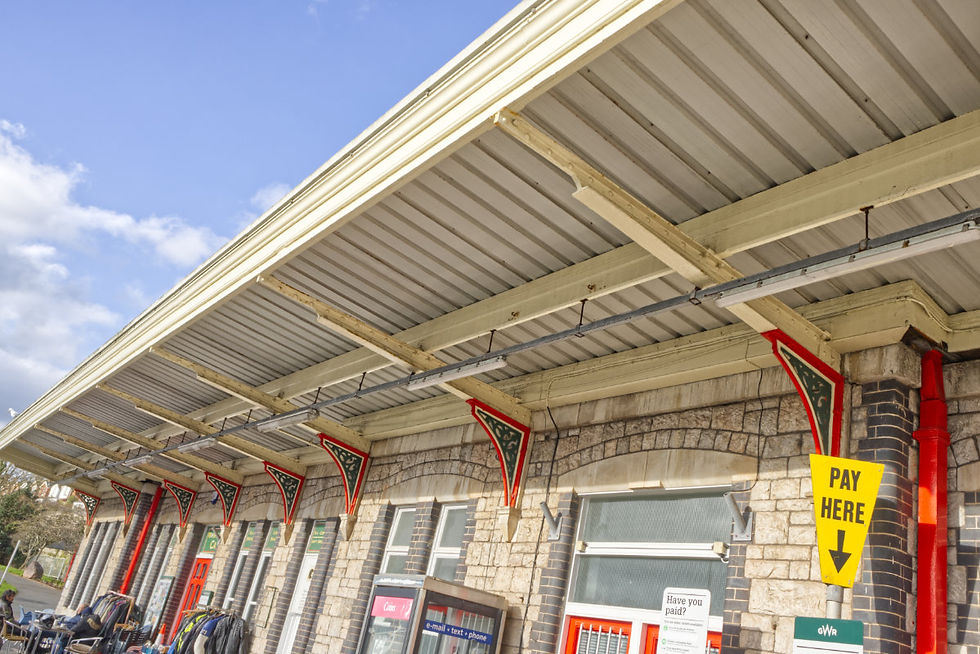
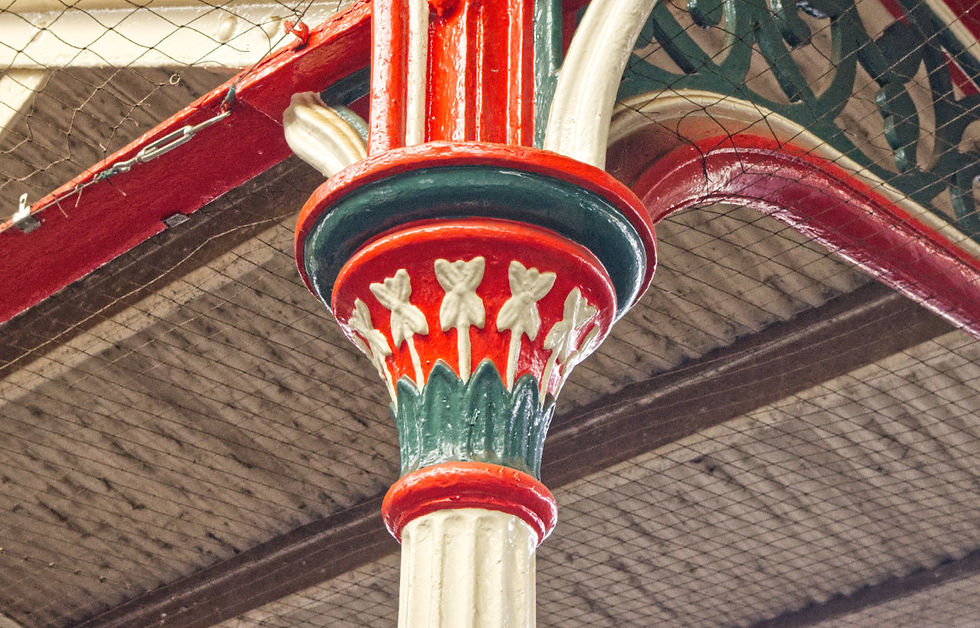
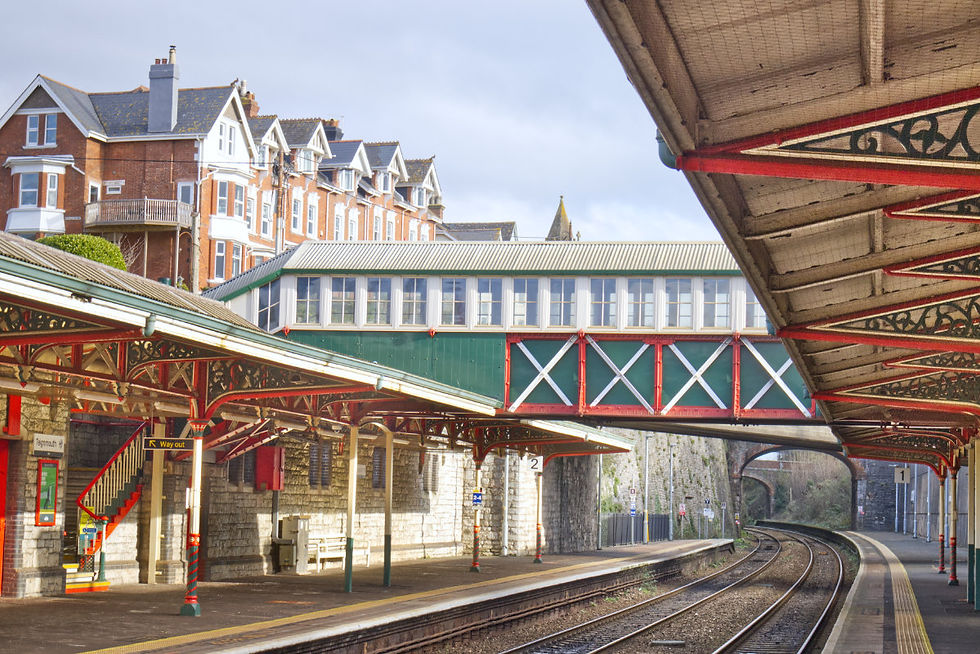
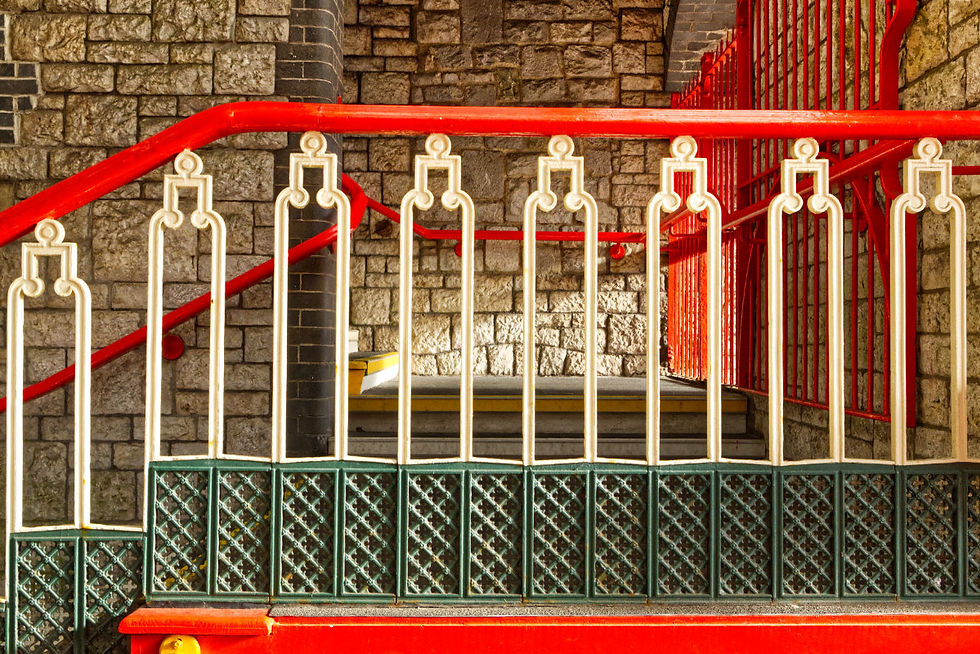
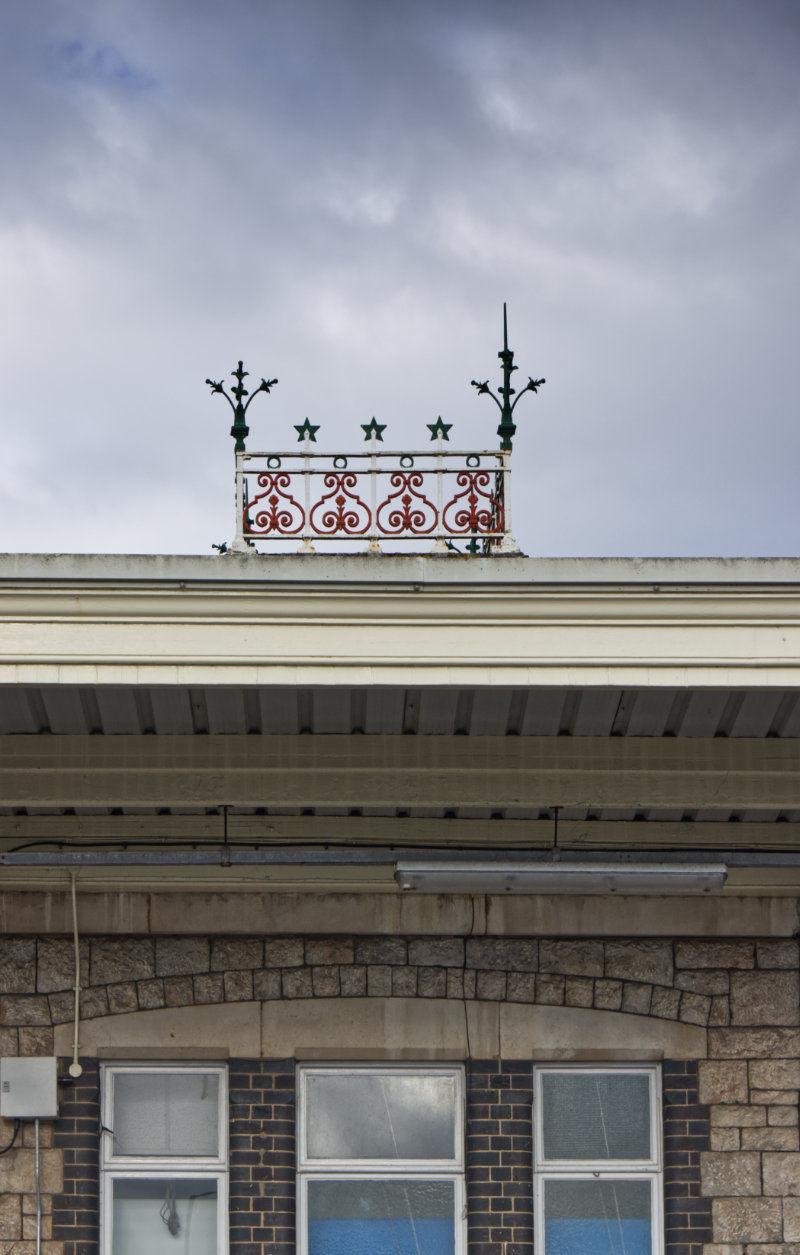
The so called "Noah's Ark" mentioned in the article above was the nickname of the original station building, a wooden shed like structure atop a long platform which from some angles looked like the classic image of the Biblical boat. The new station was designed in what was termed "French Chateau" style, hence the ornate metalwork on the roofs. Finished in 1894 it was widely reported to be the finest railway station in Devon. Teignmouth was setting the standard which other resorts were soon to follow.
Western Morning News - Saturday 29 December 1894
TEIGNMOUTH.
The past year will long be memorable in Teignmouth for, practically, the completion of its new and handsome Railway station. Every portion of the old structure has been swept away, and the buildings and approach which have taken its place constitute one of the very finest Stations in Devonshire. In the complete remodelling which has taken place the goods department has been removed from the down to the up side, where there is now a commodious goods yard covering about 23,000 square feet, with an approach at either end. A refuge siding bas been constructed and improved connections made with the Teignmouth quay. The new platforms are 500 feet long (with 400 feet covered by verandahs), and twenty feet wide, and there are spacious waiting rooms and offices.
The buildings are of limestone and blue brick quoins, with Portland stone dressings. Outside the station on the town side another splendid improvement has been carried out by the removal of unsightly buildings and the formation of a very large Station yard.
The new station was designed in the G.W.R. Company's offices at Paddington, Mr. J. C. Inglis, C.E., has superintended the work, and Messrs. Claridge and Bloxham, Banbury, are the contractors. It is estimated that over £25,000 (Over £2 million in today's prices) has been spent on the station. Teignmouth people are naturally delighted with the result. The ever-increasing number of excursionists who visit the town during the summer will now find ample accommodation awaiting them, and will receive a much better " first impression" than heretofore. The work has been in hand about eighteen months. Considerable improvements have also been carried out at the Quay, where business has been decidedly brisk throughout the year.
Owing to the rain the summer was not up to the average. Residents were unusually active,
however, in promoting the success of the town as a seaside resort. There was a healthy rivalry between various parties as to the best means of increasing the town's attractions. Eventually the committee of which Mr. W. H. Walton was chairman succeeded in carrying out a splendid summer programme. In addition to the engagement of the usual season band, first-class concerts were given on the pier by the Royal Marine Band from Plymouth, the Royal Artillery band, and other accomplished performers, and visitors found no lack of amusements.
The success of the committees undertaking has encouraged Torquay to think about doing
likewise next summer. Daily trips by the Duchess of Devonshire steamship were also a feature of the season, and were the result of the acquisition of the control of the pier by the steamship company.
Distinct advances have been made in the sanitary condition of the town, thanks to the zeal with which Dr. Piggott has discharged his duties as medical officer of health. A new lifeboat was launched here daring the summer, but not proving altogether satisfactory has been removed again, and the old boat returned. Shaldon new church was opened by the Bishop of Exeter.
I will be doing a similar series on Shaldon which will include a photo portrait of that very "New Church" mentioned here.


Great photos and history info re Teignmouth Station - I’m one of small team who have been tending the planters and flower pots on both platforms plus the 2 raised planted beds at the front of the station for several years -only very recently got around to starting a Friends of Teignmouth Station Facebook site